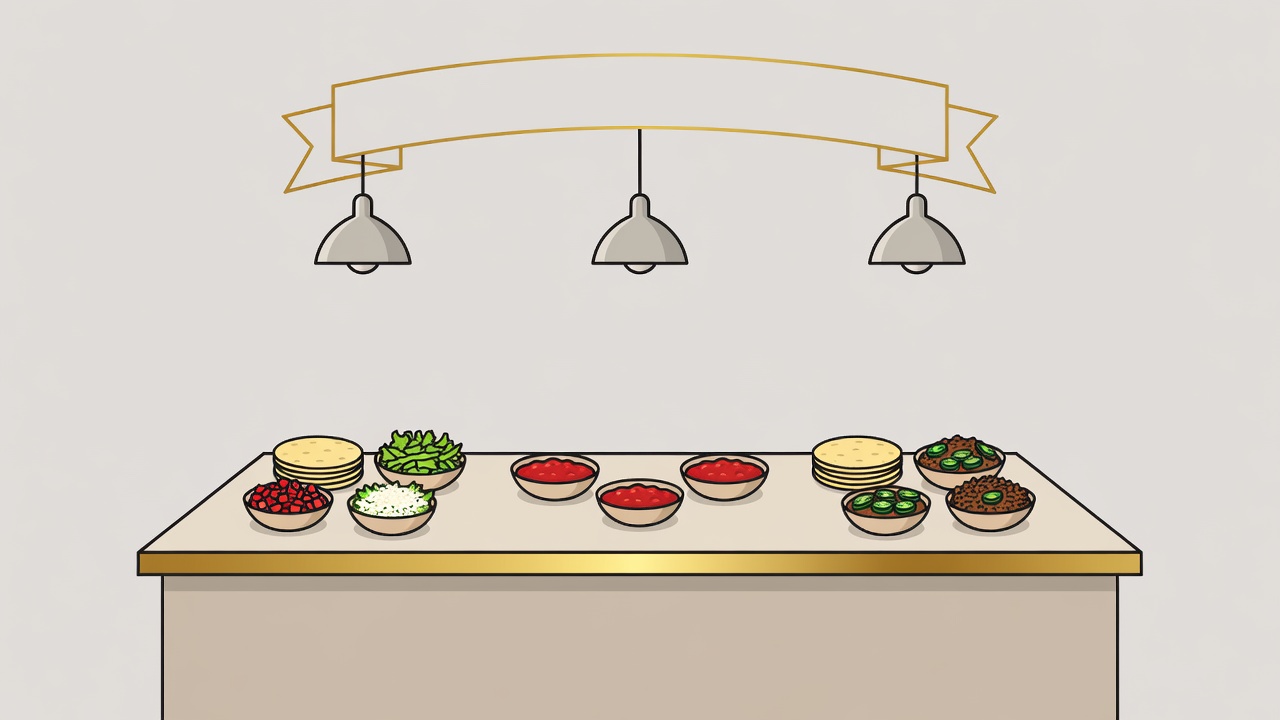
Think of the island as a second host
When guests arrive in a kitchen with an island, they drift towards it. It is where the light is, where the food will appear and where conversation naturally collects. That pull is useful, but only if the island is ready for it. A cluttered top, a fruit bowl in the centre and stools tucked in on every side all send the message that the space is occupied.
Clear the surface completely before you lay anything out. Move appliances, chargers and paperwork to a cupboard for the evening. Then decide what the island's job is: the full taco bar, the fillings-and-salsa core with plates elsewhere, or a gathering point for drinks and snacks while the main bar runs along a wall counter. Giving it one clear purpose stops it becoming a dumping ground.
This kind of task-led thinking has a long history. Margarete Schütte-Lihotzky's Frankfurt Kitchen of 1926 and Lillian Gilbreth's motion studies, which informed her "Kitchen Practical" of 1929, both set out to reduce unnecessary steps. You can apply the same idea to an evening: every dish should sit where the person using it reaches it most easily.
Split the island into warm and cool
Warm edge facing the hob
Tortillas and hot fillings sit closest to the cook, so topping up takes a turn and a step rather than a trip around the room.
Cool edge facing the room
Salsas, chopped onion, coriander, crema and cheese face outwards, where guests stand longest and need the clearest view.
A clear centre strip
Leave the middle as a gap for setting a plate down while spooning salsa. It also keeps sleeves away from the warm side.
Ends as start and finish
Plates on the end nearest the door; lime, napkins and cutlery on the end nearest the table.
One side or two?
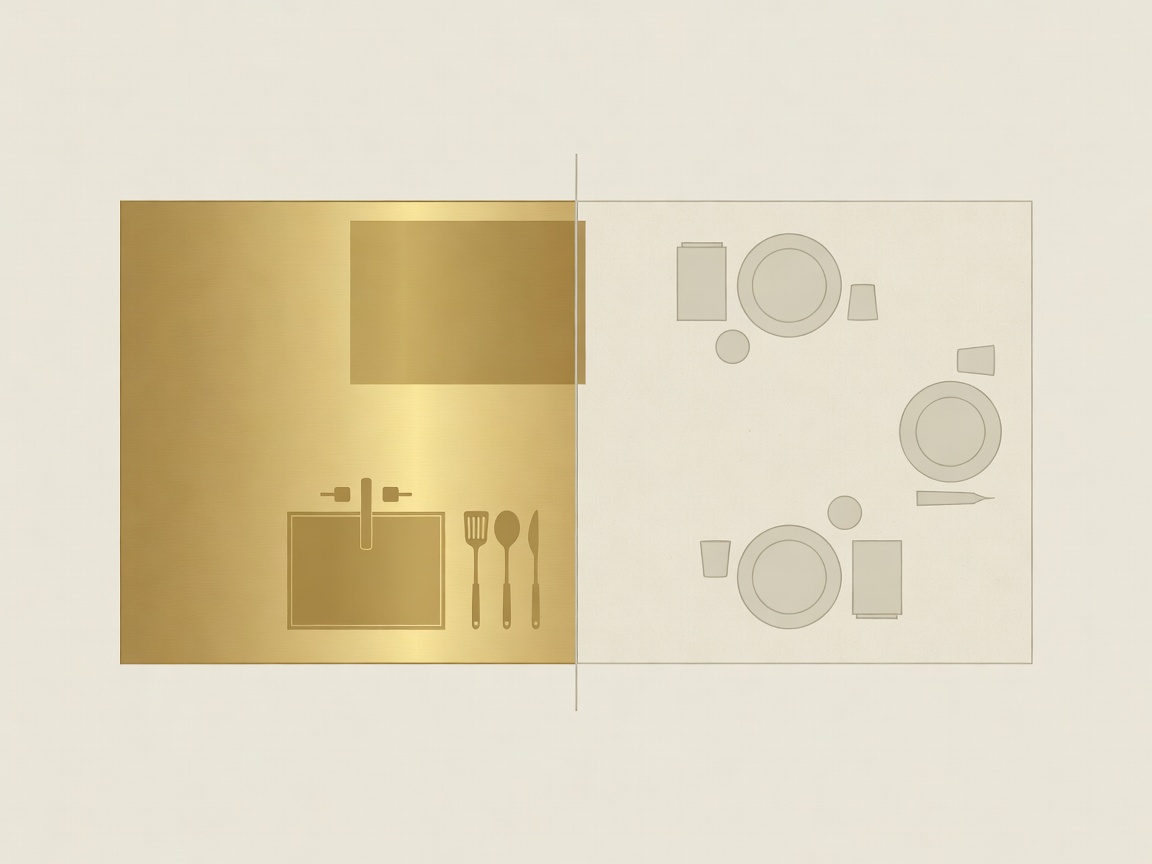
If guests can walk comfortably along both long sides of the island without brushing the hob or oven door, set up a mirrored bar: the same sequence on each side, sharing the tortillas in the middle. Two lines move a crowd quickly and turn the island into a sociable loop where people chat across the top.
If one long side is effectively part of the cooking zone, serve from the room-facing side only and keep the kitchen side for you. Guests will understand instantly that the back is "staff only" if that is where the pans and the chopping board sit.
What to do with the stools
Stools pulled up to an island block access to exactly the surface you want people to use. During service, move them back a little or line them along a wall as extra perches. Once the first round is served, bring them back: an island with seats becomes a relaxed counter for people who prefer to stay near the food and the cook.
Refills, power and light without rebuilding
Keep a stack of backup bowls and a spare cloth inside the island cupboards, or on a rolling cart parked at the cook's end. Swapping a full bowl for an empty one is quicker and tidier than refilling at the table. If you use an electric warmer or slow cooker, run the lead along the cook's side and away from where guests stand, and follow the appliance maker's instructions; if your island has no suitable socket, keep that item on the back counter instead.
Pendant lights over an island do half the presentation work for you. If yours are bright and cold, a warmer bulb for the evening makes food look more appetising. If there are no pendants, a lamp on the back counter angled across the dishes will help guests read labels and see what they are choosing.
Next, give the cool side some structure with our condiment station guide, or go back to the overall serving route to check how the island fits.