Start from what guests need, not from chair count
It is tempting to count chairs and decide the guest list from that number. A better question is: can each person put down a plate and a drink somewhere within easy reach? Tacos are eaten by hand, mostly in a few bites, so guests rarely need a full place setting. They need a stable surface for the plate, somewhere to rest a glass, and a napkin. Once you think in those terms, the number of usable spots in even a small flat tends to double.
Christopher Alexander's influential book A Pattern Language (1977) describes patterns such as "Sitting Circle" and "Light on Two Sides of Every Room", observing that people settle where seats loosely face one another and where light is soft and even. You can borrow that instinct: cluster seats so people can talk across them, and put a lamp where the dining corner is darkest.
Places to land a plate
The table itself
Clear it completely — no centrepiece taller than a jar of flowers — so every edge is usable.
Ledges and sills
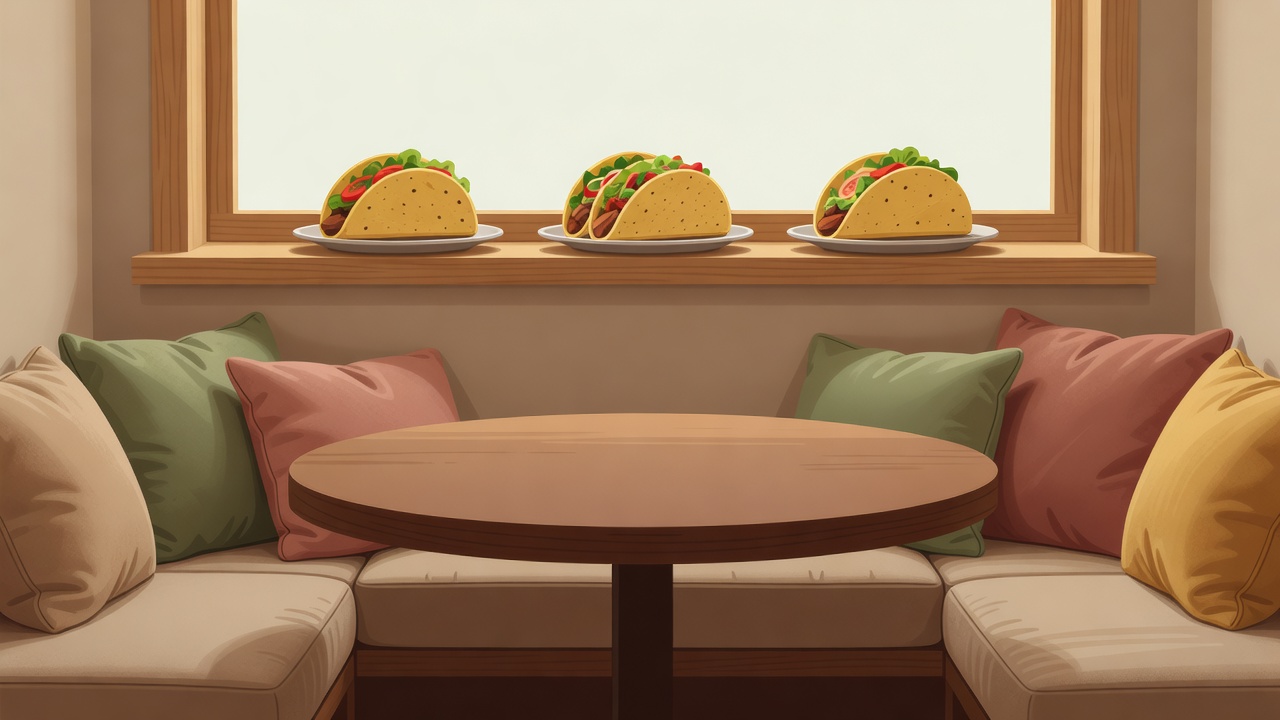
A deep window sill, a cleared bookcase shelf or a sideboard becomes a standing counter for two or three people.
Bench seating
A bench or a sofa pulled up to one side of the table seats more people than separate chairs in the same run.
Borrowed perches
Desk chairs, footstools and the island stools all count. Add a small side table or tray beside low seats.
Serve in waves rather than all at once
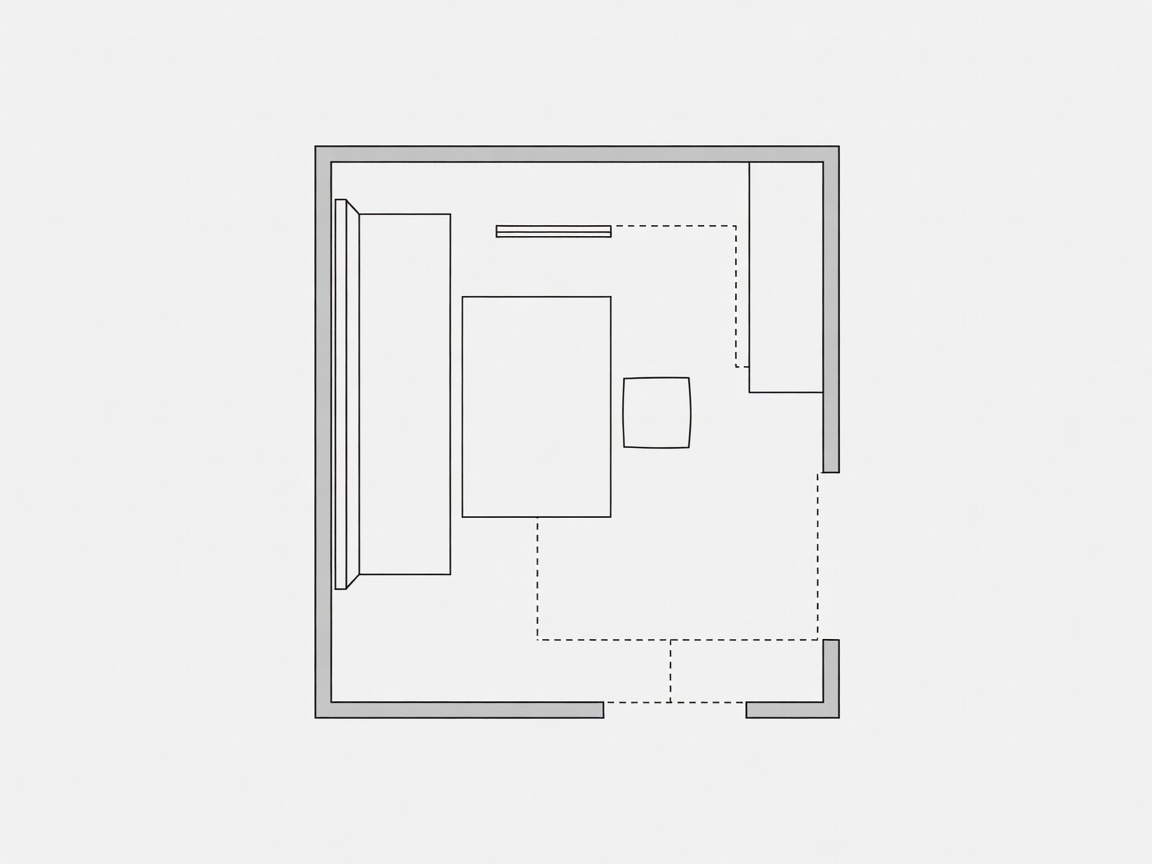
In a compact home, the real constraint is often the moment everyone serves at the same time. Spread it out. Invite a few people to start while others are still arriving, or let the first round of tacos go out while a second batch of filling finishes cooking. Guests naturally fall into a rhythm: some eat, some chat by the bar, some go back for seconds. Fewer people are in motion at any moment, so the room feels larger.
The same thinking applies to dishes. A slim drinks station in a hallway or by the sofa means the dining corner is used for eating rather than for queueing at the fridge. Dessert can live somewhere else again, which gives everyone a reason to stand up and move later in the evening.
Keep the walk short and clear
The path from the end of the taco bar to the seats should be the easiest walk in the house. Move bags, shoes, laundry baskets and stray chairs out of it. If the route crosses a rug with a curled edge, tape it down or roll it away for the night. Guests carrying a full plate in one hand and a drink in the other appreciate a path they can walk without looking down.
Make it feel generous
Generosity in a small room comes from details rather than square metres: a stack of napkins on each surface, a few extra plates within reach so nobody hunts for a clean one, and warm, low lighting that flatters both the food and the guests. A cloth on a side table turns it into a deliberate dining spot instead of a makeshift one.
For the serving side of the evening, revisit the serving route and condiment organisation, or send us your layout puzzle.